
SuVayu 25K
Clean the hotspot. On the spot.
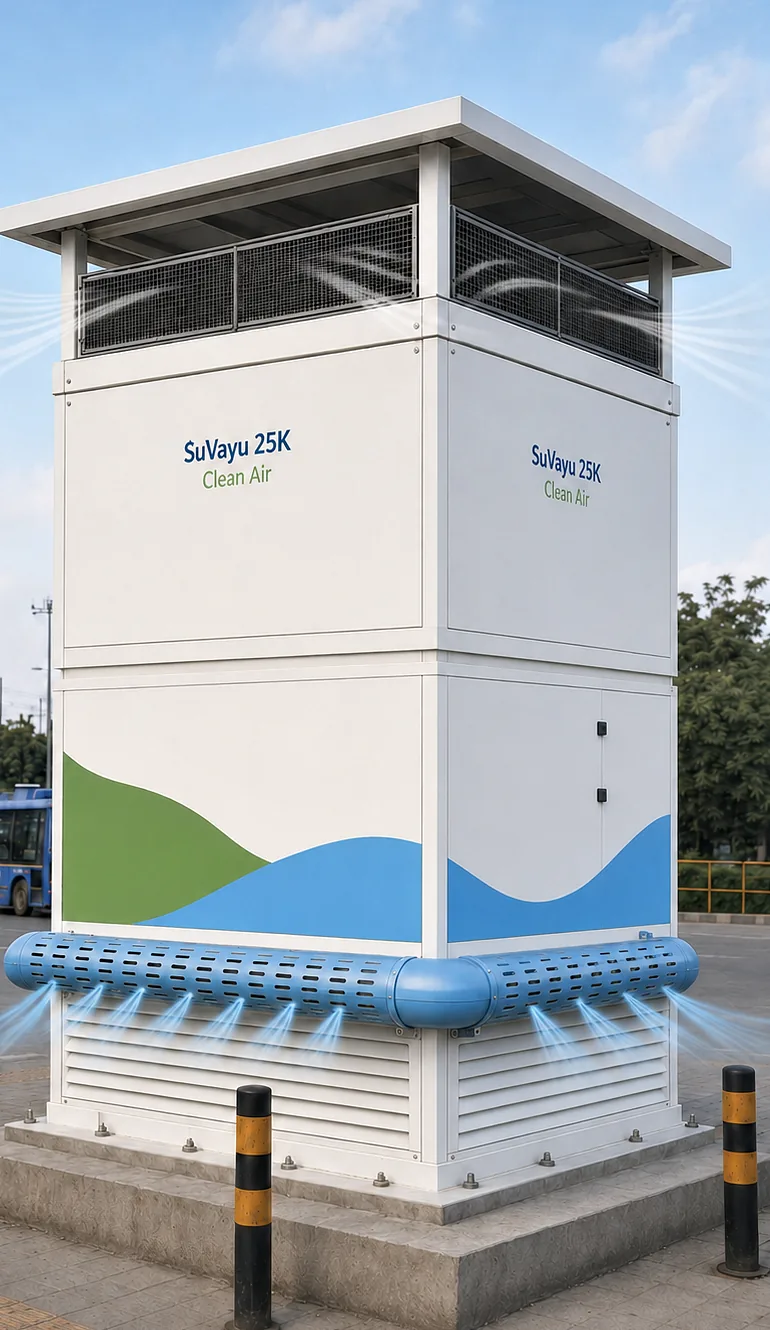
A modular tower for traffic junctions and bus terminals. It draws 25,000 CFM (42,500 m³/h), removes particulates and gases, and returns the air at breathing height.
For: City bodies, pollution control boards, smart-city projects, transport terminals and CSR programmes
Bought as: Unit supply with AMC and a monitoring contract, or a sponsored 90-day pilot
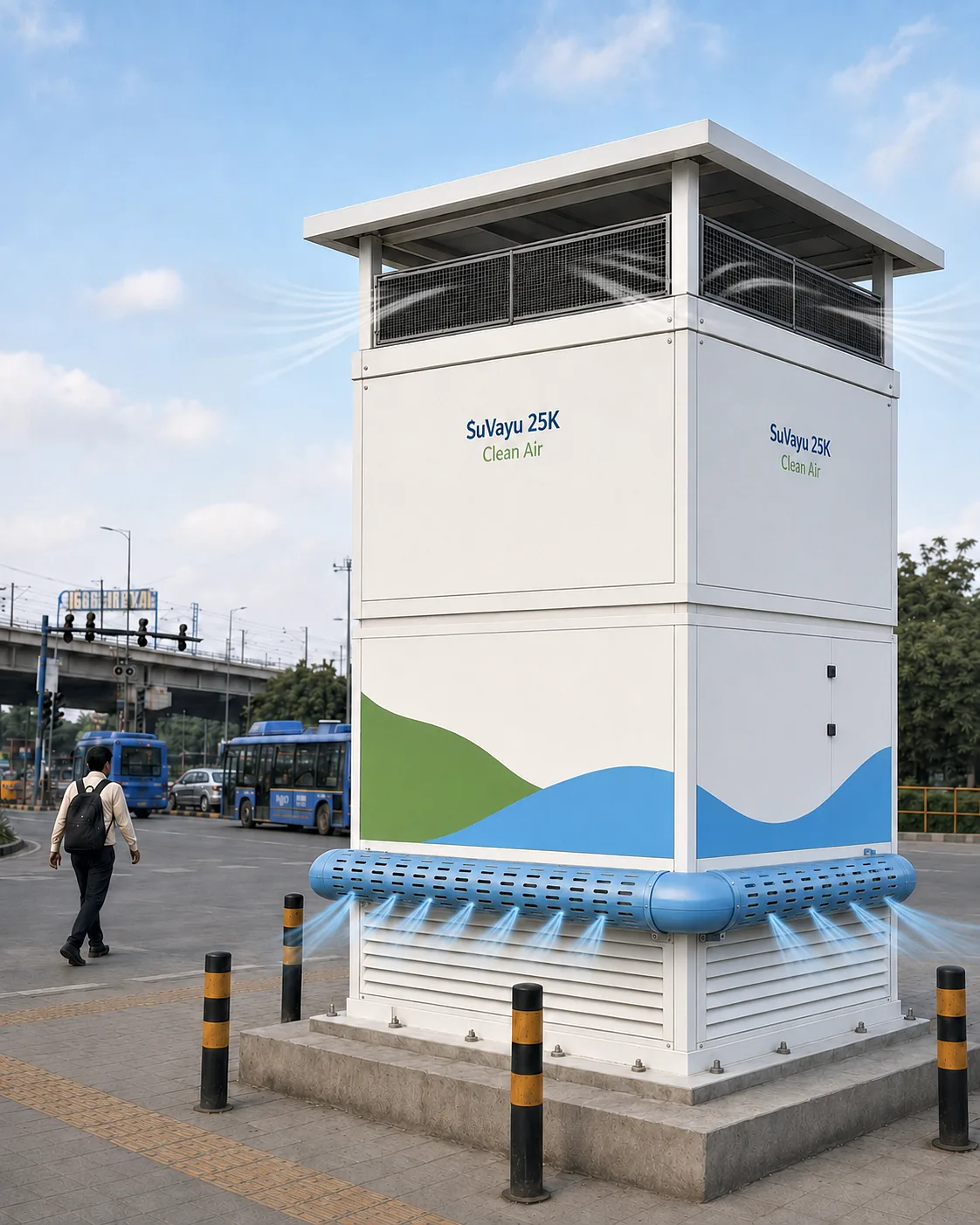 Concept render
 What it does
Junctions and terminals are where people stand in traffic exhaust for an hour a day. Sprinkling and monitoring do not change what they breathe.
SuVayu 25K draws 25,000 cubic feet per minute (42,500 m³/h) through staged particulate filters and a bed of adsorbent, then discharges the cleaned air low, towards queues and footpaths. Each unit treats about a hectare, so a city deploys them in tens, at the places people wait.
One unit does not change a city’s AQI. It lowers exposure in a zone of roughly one hectare, and each deployment is measured by independent monitoring before more units are added.
Why it is different
- Captures gases as well as particulates. Most smog towers stop at PM.
- 2.4 m footprint, so units go where the queues are, in tens per city.
- Built-in monitoring with time-stamped performance reports for the operator.
- No water, no effluent. Spent adsorbent is removed on schedule.
- Supplied with an AMC and a reporting contract, so the operator has one vendor for the life of the unit.
Specification
Key figures
Design values from the current engineering package. Airflow and pressure drop are verified on a full-size filter bank before fabrication release.
- Nominal airflow
- 25,000 CFM (≈ 42,500 m³/h)
- Air treated
- ≈ 1 million m³ per day
- Influence zone
- ≈ 1 hectare local exposure reduction
- Planning envelope
- 2.4 × 2.4 × 5.5 m (±15 %)
- Power allowance
- 16.5 kW including auxiliaries
- Noise target
- ≤ 72 dB(A) at 1 m
- Captures
- PM10, PM2.5, SO₂, NOx, CO, VOCs
- Monitoring
- On-site sensors, time-stamped reporting
How it works
Four stages, one pass
Elevated intake
Polluted air is drawn in above head height, away from the discharge.
Staged particulate capture
Pre-filter, PM10, PM5 and PM2.5 stages, then a fine filter.
Adsorbent bed
The adsorbent binds SO₂, NOx, CO and VOCs.
Breathing-zone discharge
A centrifugal blower returns cleaner air low, toward people.
Status & evidence
Status: pilot unit in fabrication
Engineering is complete. A SuVayu 10K pilot unit (10,000 CFM, 10 HP blower) is in fabrication to check inlet orientation, filter pressure drop and exposure reduction before the first full-size 25K is built.
A 90-day pilot has been proposed for a high-exposure passenger zone in Delhi: 14-day baseline, controlled on/off operation, breathing-zone measurement points, independent analysis.
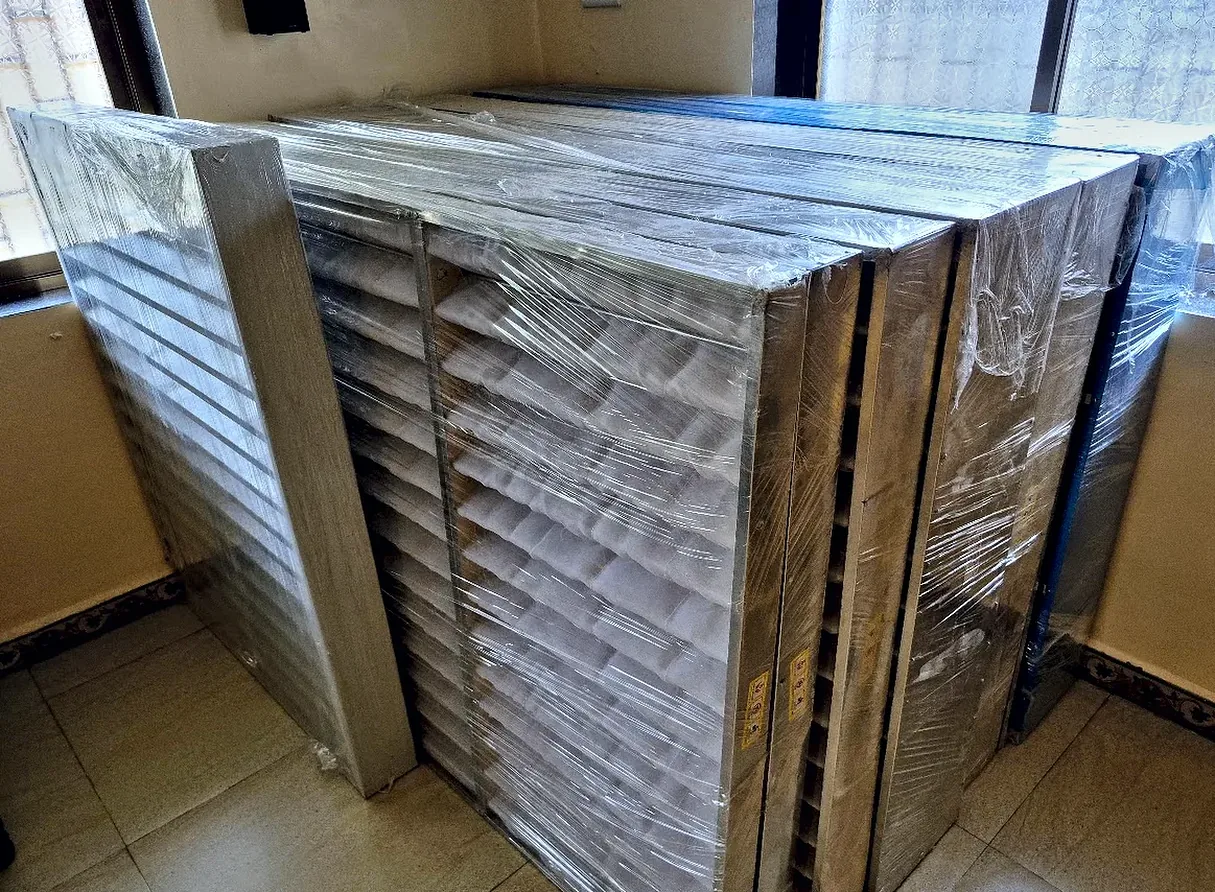
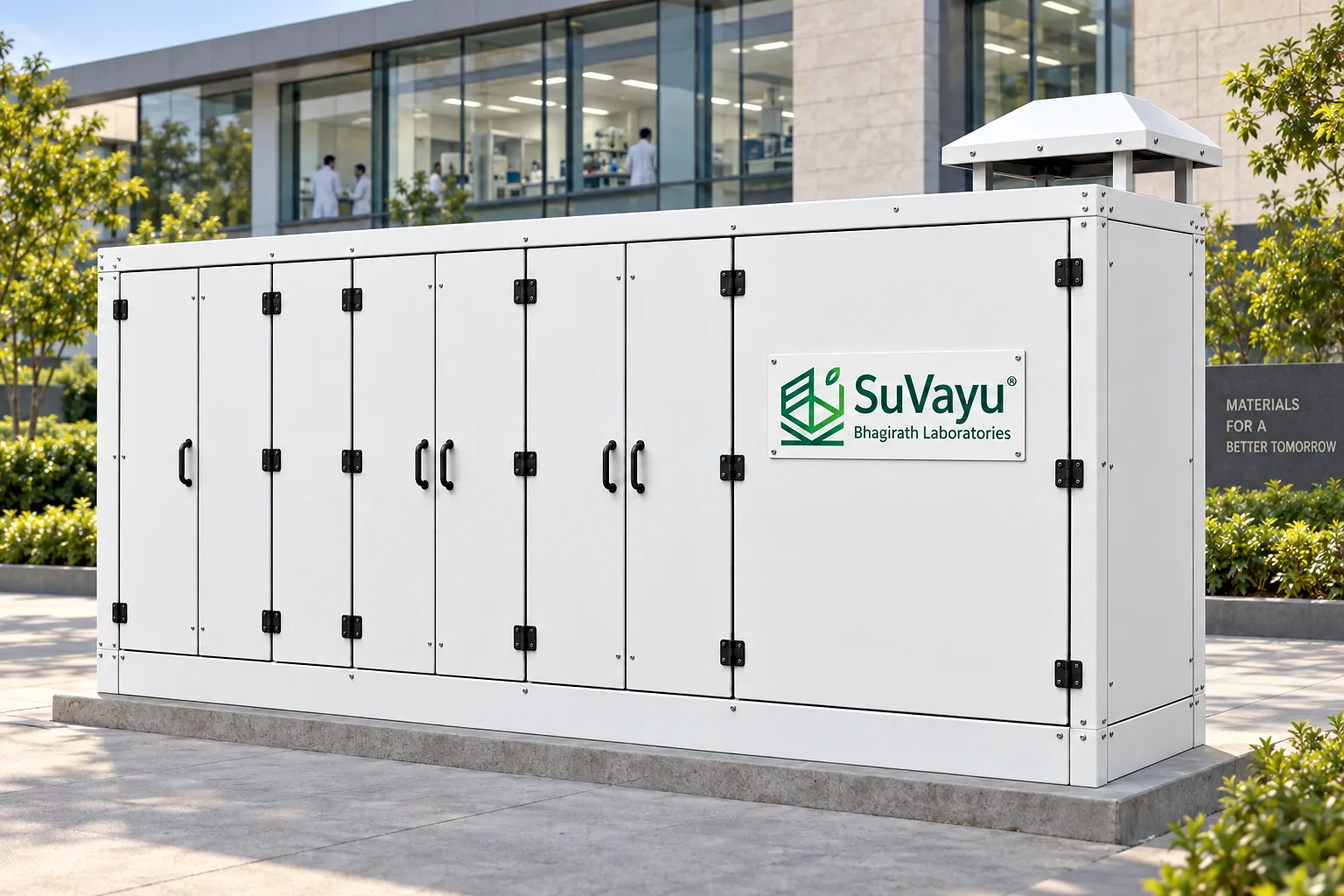 Concept render
 Commercial model
How it is bought
Priced per site after sizing. Every supply comes with an annual maintenance contract (AMC) option and a measurement plan, so you see inlet and outlet readings for your own installation.
- Supply, installation and commissioning, per unit
- AMC: filter and adsorbent service, with spares
- Monitoring and reporting subscription in a tender-ready format
- 90-day sponsored pilots for CSR funds and government bodies
Questions we get
Does one tower clean a whole neighbourhood?
No. One unit lowers exposure in roughly a hectare around it: a queue, a platform, a crossing. Coverage grows by adding units.
How is performance proven?
Baseline first, then on/off periods under matched conditions, with sensors at the intake, the discharge and at breathing height. A third party analyses the data.
What happens to the captured pollutants?
Particulates stay in the filters; gases bind to the adsorbent. Both are replaced on schedule and the spent adsorbent is disposed of safely on land or used in cement products.
How much power does it use?
The design allowance is 16.5 kW including auxiliaries. Electricity is the largest running cost, so sites with grid access or a sponsoring partner are preferred for pilots.
Can it go into a tender?
Yes. We supply the specification, the monitoring plan and the reporting format in a form that fits a tender or a CSR proposal.
Gallery
More views
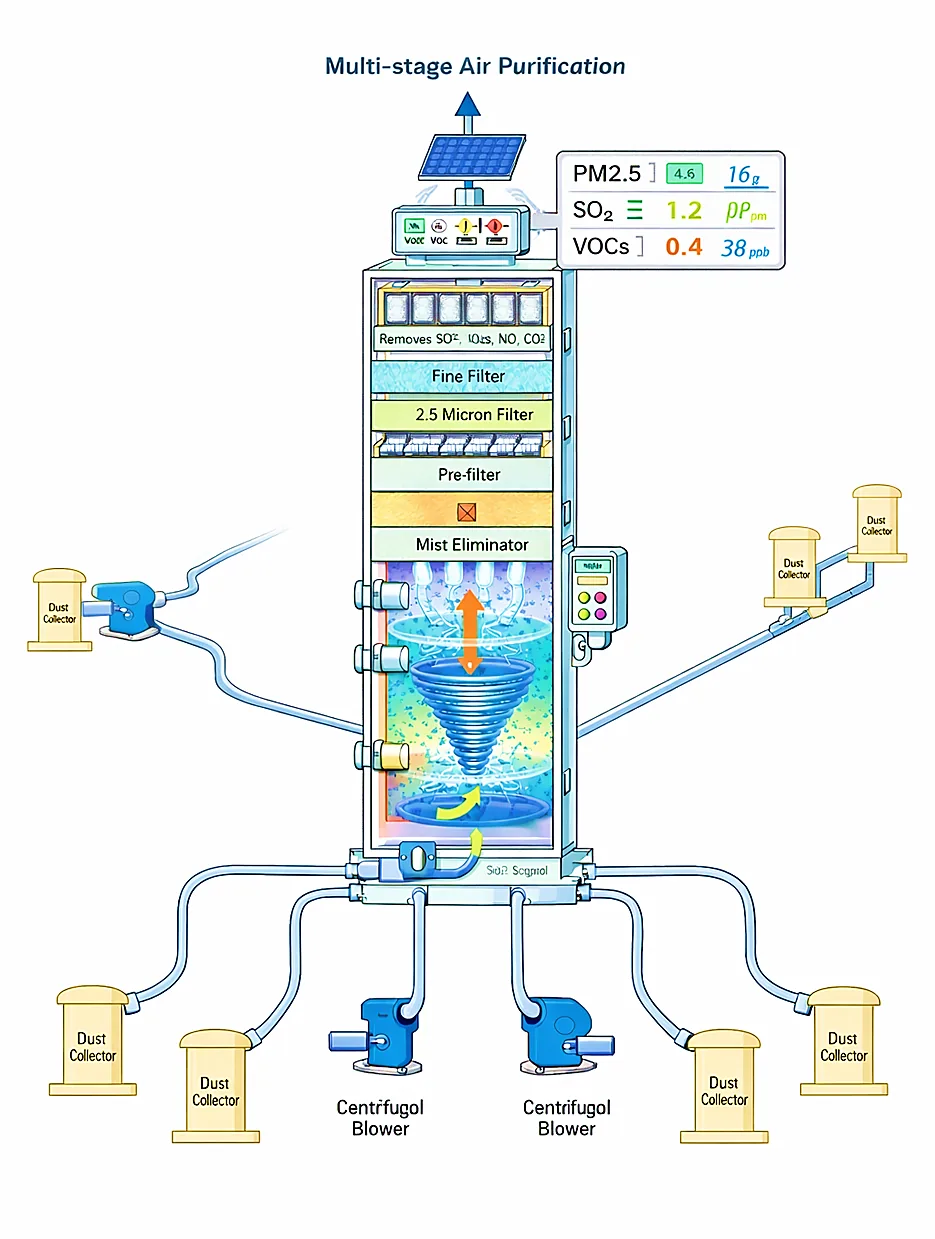
 Concept render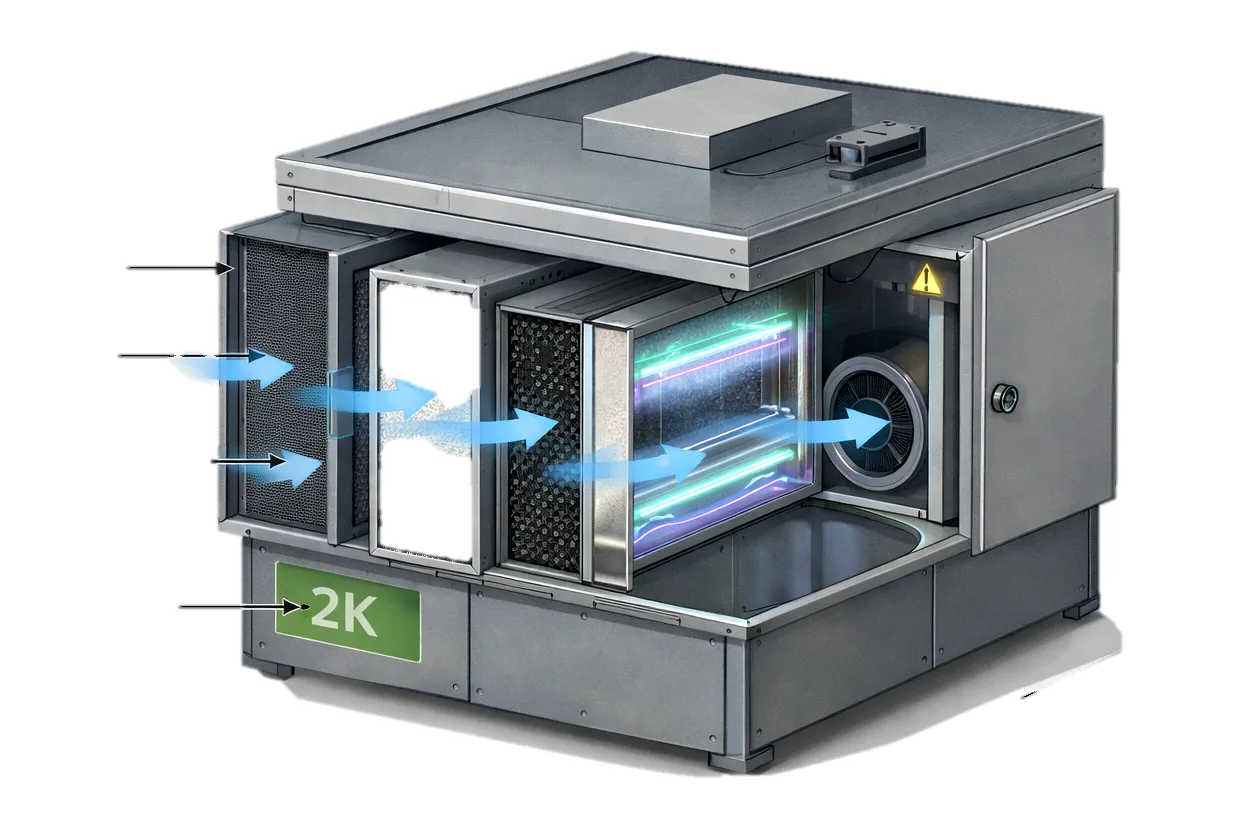
Talk to us about SuVayu 25K
Send your site details or a stack report. We reply within two working days.